
 Germany

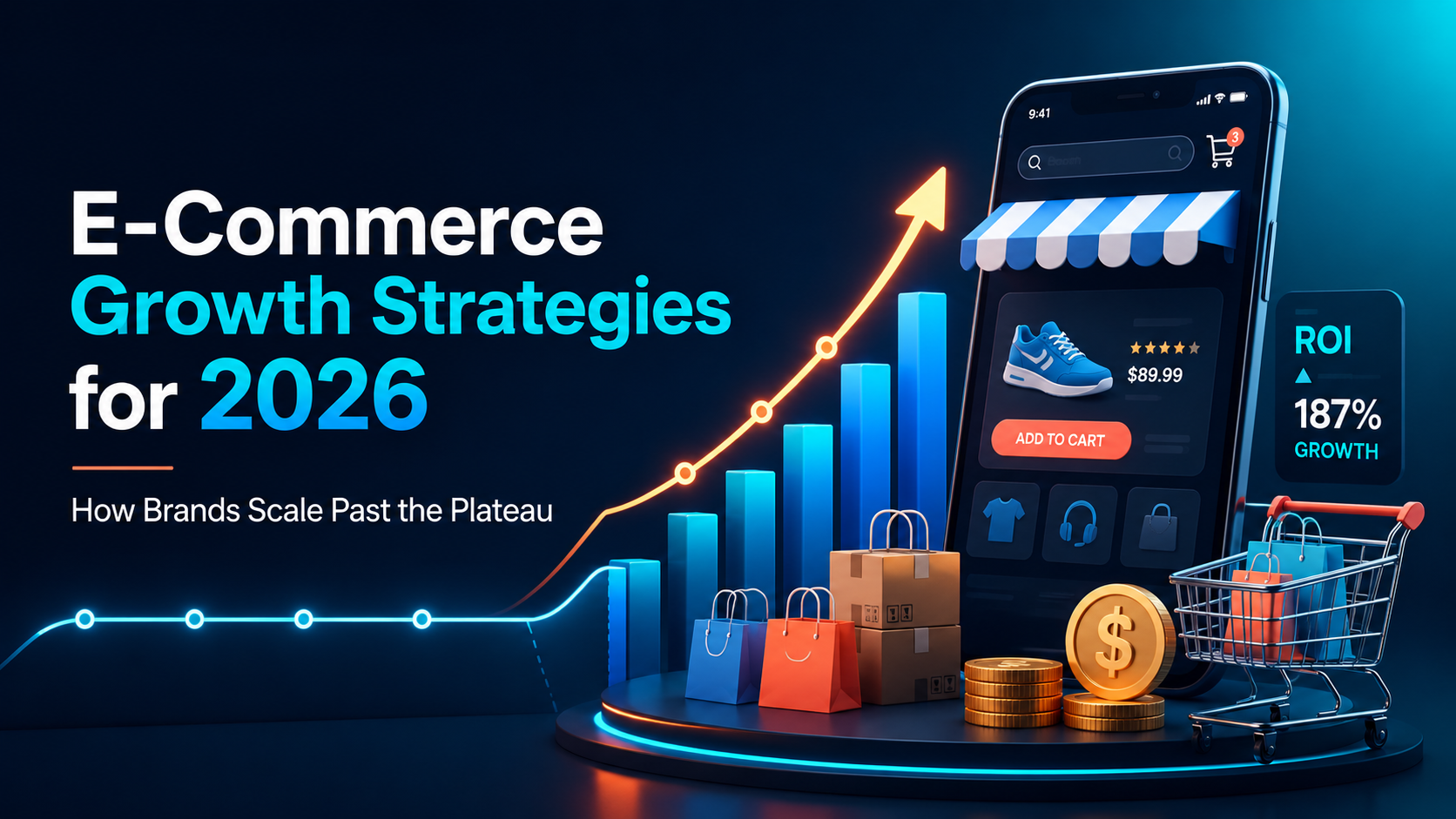
Most e-commerce brands follow a predictable growth curve. The early months are exhilarating - early adopters convert well, paid ads find easy wins, and organic momentum builds quickly. Then, somewhere between month six and month eighteen, growth stalls. The same tactics that worked before stop working. CAC rises. ROAS falls. The founders who attribute this to market saturation are usually wrong. The brands that break through are the ones who diagnose the real cause and address it systematically.
In 2026, the difference between e-commerce brands growing at 40 percent annually and those stuck at single digits rarely comes down to their product. It comes down to how they approach customer acquisition, conversion, and post-purchase revenue. This piece covers the strategic frameworks that separate the two groups.
Where Growth Actually Stalls
The plateau is almost always caused by one of three structural problems: the brand is acquiring the wrong customers, the purchase funnel is leaking at a fixable point, or post-purchase revenue is being abandoned entirely. Often all three are present simultaneously, which is why a surface-level tactical response - more ad spend, a new creative direction - never solves it.
The most valuable diagnostic exercise is a cohort analysis of your first-purchase customers from the past twelve months. Segment by acquisition channel, first product purchased, and geographic market. The cohorts with the highest 90-day repeat purchase rate are where you should concentrate your growth energy. The channels and products that produce low-repeat customers are costing you more than the revenue they generate suggests.
The CAC Trap
Rising customer acquisition cost is a symptom, not a cause. Brands that respond to rising CAC by simply increasing bid caps or creative spend are treating the symptom. The underlying cause is usually one of two things: the audience that was easiest to convert has been saturated, or the landing experience is degrading the conversion rate of traffic that was previously converting well. Both are diagnosable and fixable - but you need to know which one you're dealing with before you act.
Winning on Product Discovery
The brands sustaining strong acquisition growth in 2026 have typically solved product discovery across multiple channels simultaneously rather than relying on a single paid channel. This matters because each discovery channel reaches a meaningfully different audience segment and operates with different creative logic.
The Multi-Channel Discovery Stack
The highest-performing e-commerce brands in 2026 typically combine: paid social for new audience discovery (TikTok, Meta), shopping campaigns for high-intent search traffic (Google Shopping, Bing), SEO-driven product content for organic discovery, and creator or affiliate partnerships for trust-based discovery in specific communities.
Google Shopping and Performance Max
For most product categories, Google Shopping remains the highest-volume source of purchase-intent traffic available. In 2026, Performance Max campaigns have become the primary vehicle - but they require significantly more attention than their automated framing implies. Feed quality is the primary lever. Product titles optimised for search intent, accurate category taxonomy, and competitive pricing signals in the feed consistently outperform campaigns running on generic product data. Brands that invest in feed management and structured product content see 30 to 50 percent better ROAS than brands running the same budget on unoptimised feeds.
Social Commerce and Shoppable Content
TikTok Shop and Instagram Shopping have matured enough in key markets to be serious acquisition channels for the right product categories. The common factor in brands succeeding on social commerce is not spend level - it is the quality of the product content. Native, creator-style video that demonstrates the product in a real-use context consistently converts better than product photography repurposed from the website. This content also doubles as organic reach, meaning the investment has dual utility.
Checkout and Revenue Optimisation
Checkout abandonment data for e-commerce stores consistently shows that 65 to 75 percent of initiated checkouts do not complete. For most brands, a 10 percent improvement in checkout completion rate delivers more revenue than a 10 percent increase in traffic - at a fraction of the cost. This makes checkout optimisation one of the highest-ROI activities in e-commerce growth, yet it is chronically under-resourced.
- Remove account creation friction. Guest checkout should be the default path. Forcing account creation before purchase is one of the most common and most damaging checkout barriers.
- Show total cost early. Shipping cost surprises at the final step are the single largest driver of checkout abandonment across categories. Show estimated shipping on the product page or cart, not at checkout.
- Reduce payment method gaps. Offering only card payment in markets where local payment methods (SEPA, iDEAL, BLIK, Tabby, Tamara) have significant adoption means you are actively turning away customers.
- Speed matters more than design. A fast, plain checkout converts better than a beautiful slow one. If your checkout page loads in over two seconds on mobile, fixing that is more valuable than any design change.
"The brands that grow consistently in e-commerce are not the ones with the best ads - they are the ones who have structured their business so that each customer they acquire generates three purchases, not one."
- Saleh Zaqout, Account Director at Pixelique Digital
Building Customer Lifetime Value
Sustainable e-commerce growth is built on repeat purchase rates. A brand with a 40 percent 90-day repeat purchase rate can profitably acquire customers at two to three times the CAC of a brand with a 15 percent repeat rate. This changes everything about how aggressively you can compete in paid channels, how much you can offer new customers in discounts or promotions, and how defensible your position is against competitors.
Post-Purchase Email and SMS Sequences
The post-purchase window is the highest-leverage moment for driving repeat purchases. A well-structured post-purchase sequence - order confirmation, shipping update, delivery confirmation with a cross-sell, review request with a next-purchase incentive, replenishment reminder at the right interval for your product category - consistently delivers a 15 to 25 percent lift in 30-day repeat purchase rate when implemented properly. Most e-commerce brands have some version of this but few have optimised it with segment-level testing.
Loyalty and Subscription Models
For consumable or regularly-purchased product categories, a subscription or loyalty programme is one of the most powerful LTV levers available. Subscription customers typically generate 3 to 5 times the lifetime value of one-time purchasers, and churn rates on well-designed subscription programmes in consumables are lower than most brands expect. The barrier is not customer willingness - it is implementation quality. Programmes with confusing terms, difficult cancellation, or poor product replenishment timing have high churn. Programmes with transparent terms and easy management have retention rates above 60 percent at twelve months.
E-commerce growth in 2026 is not about finding new hacks or exploiting emerging platforms before they become competitive. It is about building the structural foundations - customer quality, conversion efficiency, and post-purchase revenue - that compound over time. If you want a diagnosis of where your specific brand is leaving growth on the table, our team offers a no-commitment audit that maps your current funnel against the benchmarks we see across the brands we work with.