
 Saudi Arabia

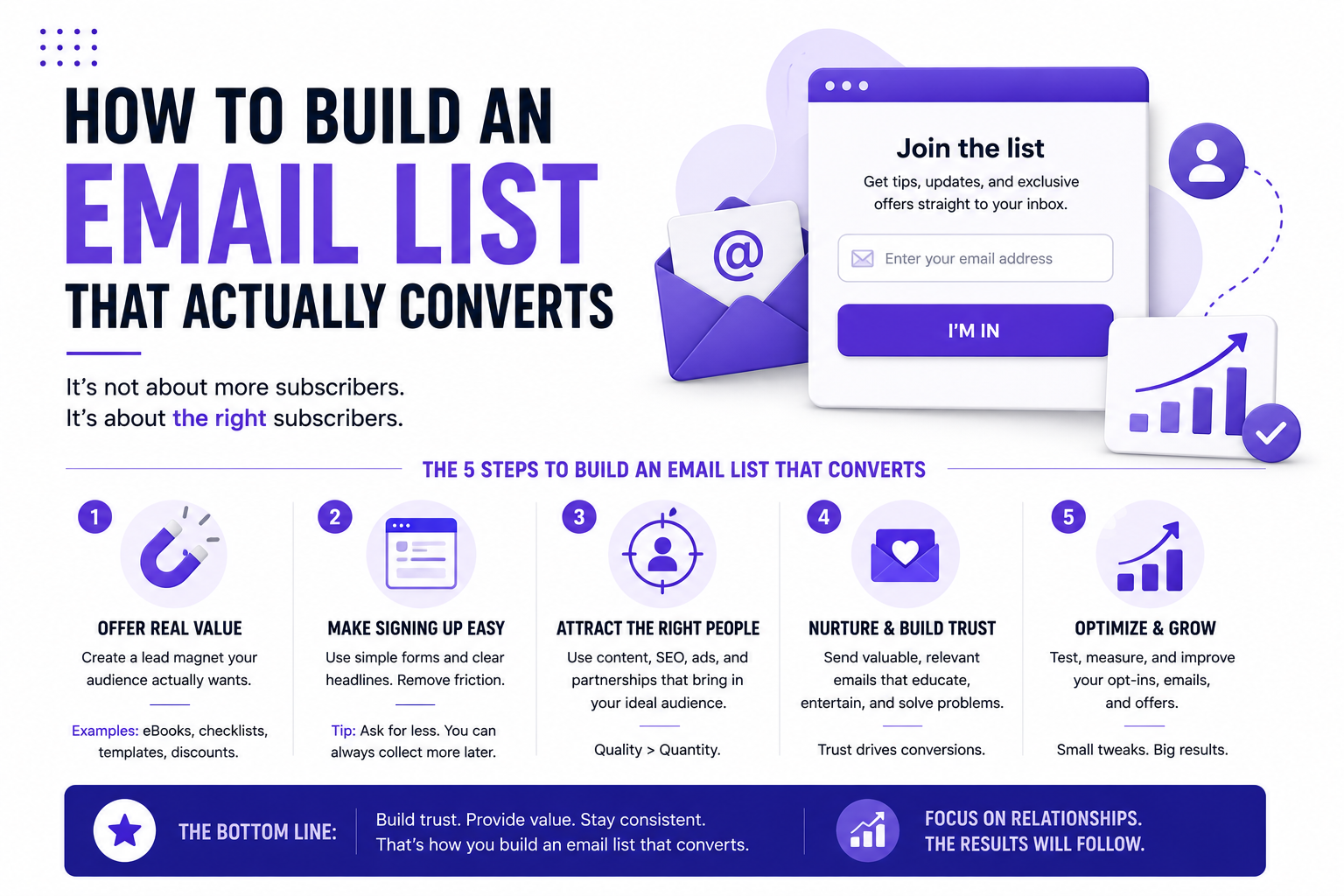
Email remains the highest-ROI digital marketing channel available to most businesses - consistently outperforming paid social, organic search, and display advertising on a cost-per-revenue basis. But the performance gap between brands with well-built email lists and those with poorly built ones is enormous. List size is largely irrelevant. List quality - the degree to which your subscribers are genuinely interested in what you sell - is everything.
This article is about building an email list the right way: attracting subscribers who are already primed to convert, maintaining list health over time, and structuring the subscriber journey so that your list generates revenue rather than just metrics.
Quality Over Size: Why This Matters More Than You Think
A list of 5,000 engaged, relevant subscribers will consistently outperform a list of 50,000 disengaged contacts on every metric that matters - open rate, click rate, conversion rate, and revenue per subscriber. The distinction is critical because building a large list of low-quality contacts is not just ineffective, it actively damages your email programme. High bounce rates and low engagement depress your sender reputation, which reduces deliverability across your entire list - including your best subscribers.
The target when building your list should be subscribers who have a genuine, identified reason to be interested in what you offer. This means being precise about who you are trying to attract and what you are offering them as a reason to subscribe. Vague, generic lists - built through contests, co-registration, or purchased data - generate vanity metrics and poor ROI. Specific, intentional lists generate revenue.
Lead Magnets That Attract Buyers, Not Browsers
The most effective mechanism for building a high-quality email list is a lead magnet - a piece of valuable content or a useful tool that someone receives in exchange for their email address. The quality of your lead magnet determines the quality of your list, because people self-select based on whether the offer is relevant to their actual needs.
The Best Lead Magnets for B2B and B2C
High-performing lead magnets solve a specific, immediate problem. The more specific the problem, the higher the quality of subscriber you attract. A "10-step email marketing checklist for e-commerce brands" will attract better e-commerce email prospects than a "complete guide to digital marketing." Specificity signals relevance, and relevant subscribers convert.
Types of Lead Magnets That Perform Well
The formats that consistently produce high-quality subscribers are: practical templates and checklists that someone can immediately use, specific guides that solve a named problem the audience already knows they have, free tools or calculators that demonstrate value while capturing an email, and exclusive data or research that isn't available elsewhere. What they share is immediate utility. The subscriber gains something useful before they have spent a penny.
Positioning Your Lead Magnet
Where you place your opt-in forms matters as much as the lead magnet itself. The highest-converting placements are: inline within relevant blog content (placed within the article, contextually matched to the topic), exit-intent popups (shown when a visitor is about to leave), and dedicated landing pages for paid traffic. Generic sidebar opt-ins and footer forms consistently underperform - they are visible to everyone but relevant to almost no one.
The Welcome Sequence: Converting Subscribers Into Buyers
The moment someone subscribes is the highest-engagement moment in the entire subscriber relationship. Open rates on welcome emails are typically three to five times higher than regular campaign open rates. What happens in the first three to seven emails after someone subscribes has an outsized impact on whether they ever buy.
What a Welcome Sequence Should Do
A high-performing welcome sequence delivers the promised lead magnet immediately, establishes what kind of value subscribers can expect to receive, builds credibility through specific proof (case studies, numbers, client results), and makes a relevant offer at the point when engagement is highest. The sequence should feel like a conversation with someone who genuinely wants to help, not a broadcast from a company trying to sell.
"Most brands treat their email list as a broadcast channel. The brands with the best email ROI treat it as the beginning of a conversation - and they design every sequence to move that conversation forward."
- Saleh Zaqout, Account Director at Pixelique Digital
Maintaining List Health Over Time
A well-built list requires ongoing maintenance. Subscribers who stop engaging are a liability: they reduce your deliverability, inflate your list metrics, and make it harder to understand what is actually working. A healthy list management practice includes:
- Regular re-engagement campaigns. Send a targeted sequence to subscribers who haven't opened in 90 days, with a clear choice: re-engage with a compelling offer, or unsubscribe. Making it easy to leave sounds counterintuitive but improves your list quality and deliverability significantly.
- Removing hard bounces immediately. Hard bounces (addresses that don't exist or have rejected your email) damage your sender score. Most email platforms handle this automatically, but verify your settings.
- Segmenting by engagement. Send your most important campaigns only to your most engaged subscribers first. If engagement is strong, roll out to the full list. If not, refine the campaign before sending to your cold segment.
- Monitoring deliverability metrics. Open rates, click rates, and spam complaint rates are indicators of list health. A sudden drop in open rate often signals a deliverability problem, not a content problem.
Building and maintaining a high-quality email list is one of the most valuable long-term assets a business can create in digital marketing. The brands doing it well have a direct revenue channel that doesn't depend on algorithm changes, ad platform costs, or platform availability. If you want to build or improve your email programme, speak to our team about what's possible for your specific business.