
 Germany

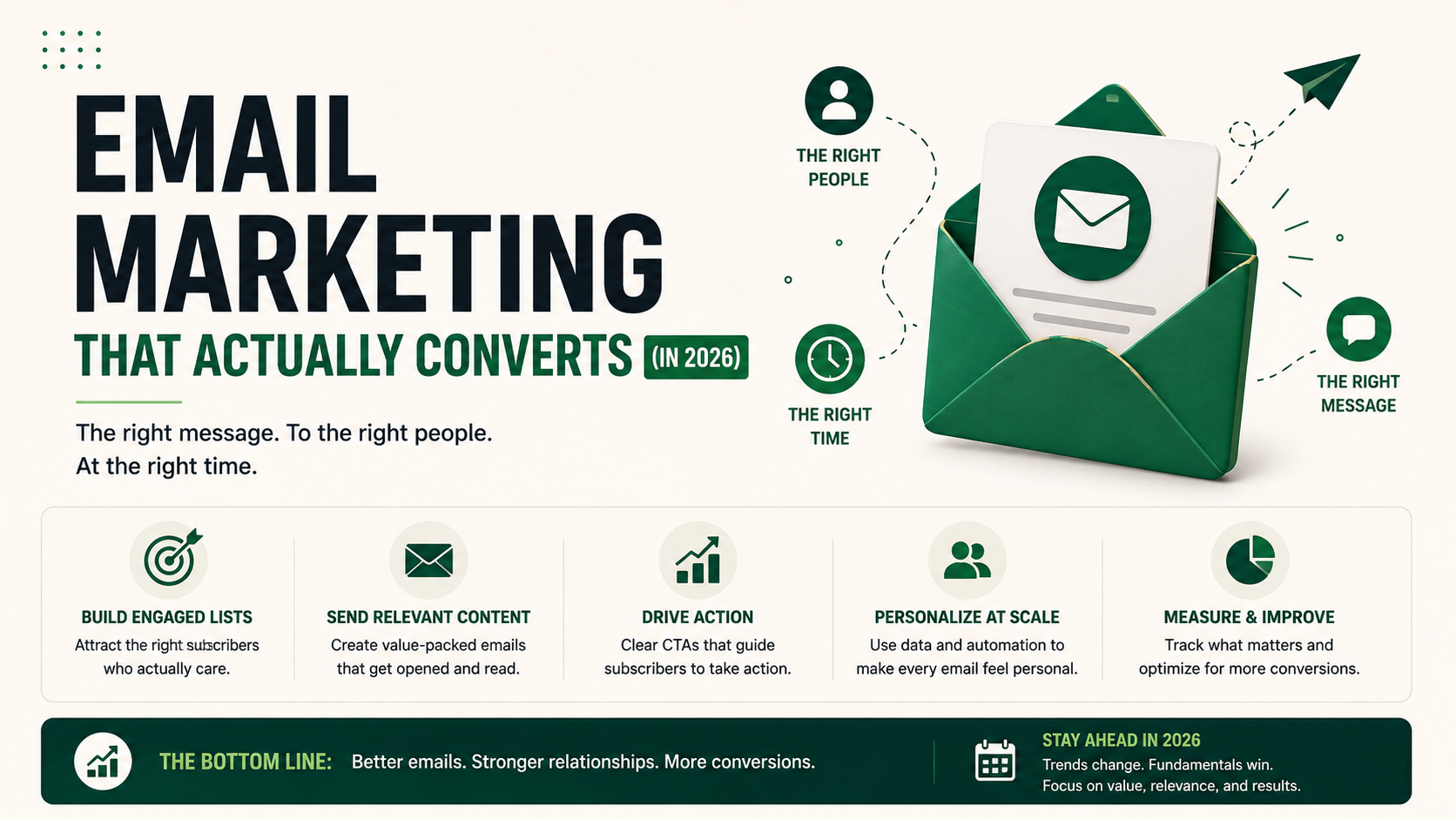
Email is, depending on the study you read, three to five times more profitable than any other marketing channel, yet most businesses treat their list as an afterthought. They collect addresses, send a generic newsletter once a month, and wonder why open rates are below 15%. The gap between businesses that take email seriously and those that don't shows up in the only metric that matters: revenue per subscriber.
The good news is that email is also one of the easiest channels to fix. Most underperforming programmes have the same five or six problems, and they are all addressable without rebuilding from scratch. Here's the playbook we use with clients to turn dormant lists into the highest-margin channel in their marketing mix.
List Quality Beats List Size
The first reflex of most businesses is to grow the list. Bigger list, more revenue, except it isn't true. A 50,000-subscriber list with 10% engagement is worth less than a 5,000-subscriber list with 60% engagement, and it costs more to send to. The metric that actually matters is engaged subscribers, not total subscribers.
Engagement-based list hygiene is therefore essential. Anyone who has not opened an email in the last 90 days should be moved to a re-engagement segment with a specific win-back sequence. Anyone who has not opened in the last 180 days should be removed from the main list entirely. This counterintuitively increases deliverability, open rates, and conversion, because mailbox providers reward sender reputation, and sender reputation is built on engagement signals.
Segments That Drive Open Rates
The single biggest unlock in most email programmes is moving from one-size-fits-all sends to genuinely segmented campaigns. Segmentation does not need to be complex to be effective, three or four well-chosen segments will outperform an ungrouped blast almost every time.
The segments that consistently move the needle:
- By recency. New subscribers (under 30 days) should receive different content than long-term subscribers, they need orientation, not the latest update.
- By engagement level. Highly engaged subscribers can handle higher send frequency. Low-engagement subscribers need fewer, more compelling sends.
- By behaviour. Recent purchasers, recent browsers, recent download requesters, each have different next-best actions and benefit from different content.
- By stated preference. If subscribers told you what they care about (product category, content type, frequency), respect that. It is the highest-quality data you have.
Three Automations Every Business Needs
Most of the revenue from email comes from automations, not broadcasts. A well-designed automation runs continuously, triggered by behaviour rather than calendar, and produces compounding results month after month. If your programme does not have these three automations running, building them is the highest-leverage investment you can make this quarter.
- Welcome series. The first 30 days of a new subscriber's relationship is when they are most engaged. A 4–6 email welcome series that establishes the brand, communicates value, and presents the first commercial offer at the right moment is the single most profitable automation in most programmes.
- Cart / form abandonment. For e-commerce, abandoned cart. For service businesses, abandoned enquiry forms. A two- or three-touch sequence within 24 hours recovers a meaningful share of would-be conversions.
- Re-engagement. For subscribers going cold (60–90 days no opens), a structured win-back sequence either re-engages them or surfaces who should be removed. Both outcomes improve programme performance.
Where Email Revenue Compounds
In our client engagements, the welcome series alone typically accounts for 25–40% of total email revenue once it is running properly. Most businesses don't have one, or have one that hasn't been touched in two years.
Email Copy That Gets Read
The dirty secret of email is that the subject line and the preheader do most of the work. Once a subscriber has decided to open, you have already won the hardest battle. This means subject lines deserve more time than the email itself: test them, write five for every send, and pay attention to which patterns work for your audience.
Inside the email, the rules are different from web copy. Short paragraphs, scannable structure, one clear primary CTA, and a conversational tone almost always outperform polished marketing prose. The brands with the highest engagement write emails that sound like they came from a person, not a marketing department. Our content team spends as much time on email copy as on long-form content, because the per-word ROI is often higher.
Don't End Up in Spam
Even the best email programme is worth nothing if it lands in the spam folder. Deliverability is a function of authentication (SPF, DKIM, DMARC properly configured), sender reputation (engaged subscribers, low complaint rates), content (avoiding known spam triggers), and consistency (regular sending volume rather than spiky bursts). Most businesses get the first part right at setup and then ignore the rest until deliverability collapses.
The single most common deliverability mistake is sending to disengaged subscribers. The mailbox providers, Gmail, Outlook, Apple Mail, measure how recipients interact with your emails and route subsequent sends accordingly. Send to people who don't open, and your reputation degrades for the people who do.
Metrics Beyond Open Rate
Apple Mail's Privacy Protection has made open rate an unreliable metric since 2021, it artificially inflates opens for many subscribers. The metrics that actually correlate with revenue are click-through rate, click-to-conversion rate, revenue per email, and unsubscribe rate. If your reporting still leads with open rate, your reporting is several years out of date.
"Email is the only marketing channel where you own the audience and the relationship. The brands that recognise that and invest accordingly outperform on every long-term metric, retention, customer lifetime value, repeat purchase."
- Roksana Miszczak, Digital Marketing Strategist at Pixelique Digital
If you'd like an honest assessment of where your email programme stands and what to fix first, get in touch. We'll audit your list health, automations, segmentation, deliverability, and creative, and give you a prioritised action plan.