
 United Arab Emirates

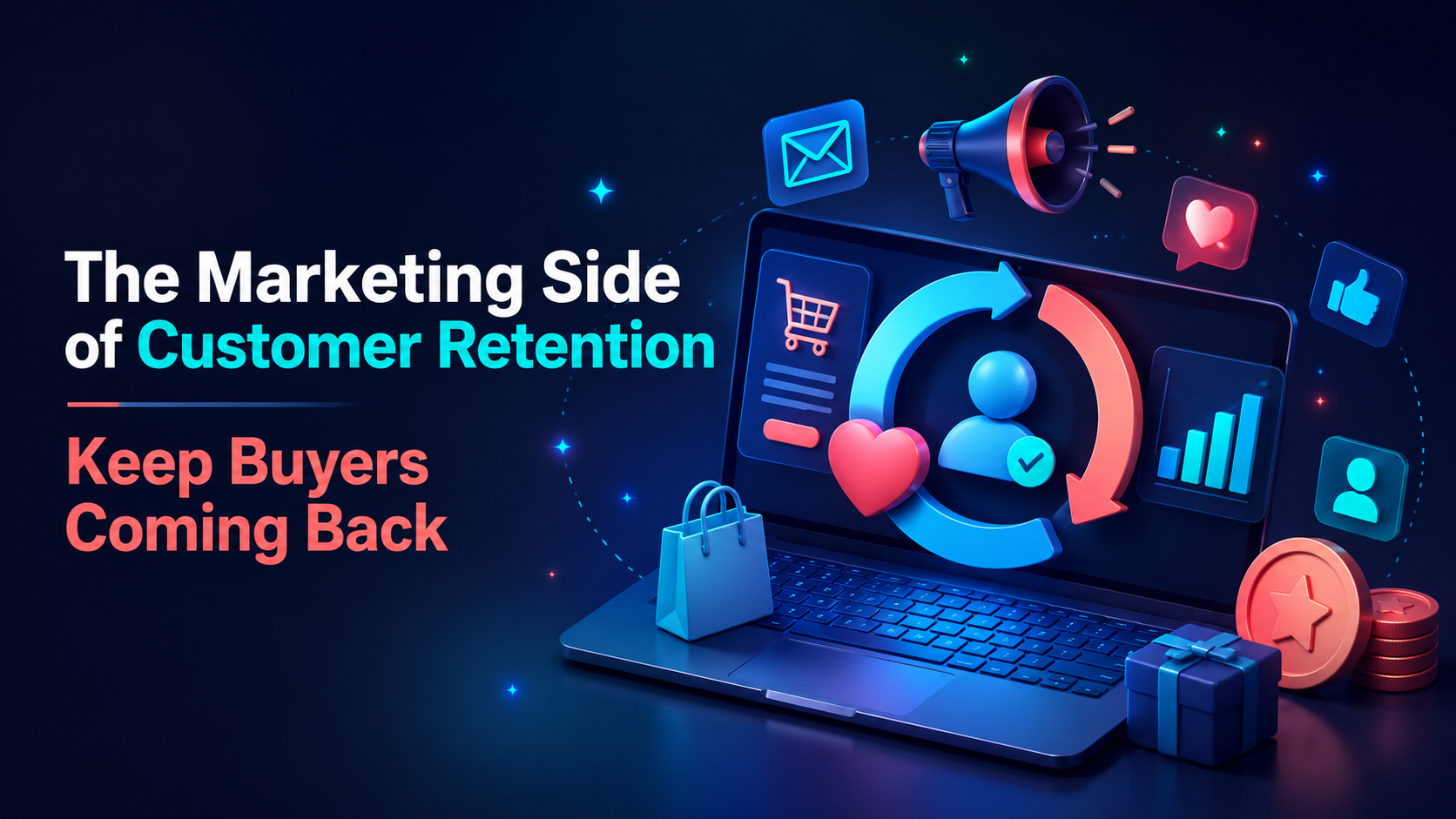
Most marketing budgets are disproportionately weighted toward acquiring new customers. This makes intuitive sense - growth requires new customers. But it ignores a fundamental economic reality: the brands with the strongest long-term unit economics are those where existing customers keep buying. A five percent improvement in customer retention rate typically produces a 25 to 95 percent improvement in profitability, depending on the business model.
Retention marketing - the deliberate use of marketing channels and communications to increase the repeat purchase rate and lifetime value of existing customers - is often underfunded and under-strategised. It shouldn't be. For most businesses, the highest-ROI marketing investment available is in keeping the customers they already have.
Why Retention Marketing Deserves More Budget
The case for retention marketing is straightforward. Existing customers have already paid your customer acquisition cost. They know your brand, trust your product or service (at least enough to have purchased once), and require less persuasion to buy again. The marginal cost of a repeat purchase from an existing customer is typically a fraction of the cost of acquiring a new one. In email marketing - the primary channel for most retention programmes - sending to an existing customer list costs almost nothing.
Despite this, the typical marketing budget allocates significantly more to acquisition than to retention. Part of this is measurement: acquisition is easy to track (ad spend → new customer), while retention impact is diffuse and harder to isolate. Part of it is incentive: new customer growth is more visible and more celebrated. But the ROI data consistently shows that retention investment outperforms acquisition investment on a cost-per-revenue basis for most mature businesses.
The Core Retention Marketing Channels
Post-Purchase Email Sequences
The highest-leverage retention marketing is the automated post-purchase journey. Most businesses send a confirmation email and then go silent until they need to promote something. High-retention brands treat the post-purchase period as a critical window: onboarding communications that help customers get value from the product (reducing buyer's remorse), check-in messages that invite feedback and surface issues before they become churn, and at the right moment, personalised repurchase nudges or complementary product recommendations.
The Retention Email Sequence That Works
Day 1: Order confirmation + what to expect. Day 3: Onboarding tips or usage guide. Day 7: Check-in and invitation to share feedback. Day 21: Relevant follow-on product recommendation or repurchase prompt. Day 45: Loyalty programme invitation or exclusive offer. This sequence turns a transactional relationship into an ongoing one.
Loyalty Programmes That Actually Drive Behaviour
A well-designed loyalty programme gives customers a rational reason to return even when your competitors offer a comparable product at a comparable price. The key design principle: the value of loyalty rewards needs to be tangible enough to influence behaviour. A points system where you accumulate hundreds of points for a fraction-of-a-penny discount on a future purchase influences almost no purchasing decision. Programmes that offer meaningful benefits - early access to new products, exclusive pricing, premium support, or significant discount thresholds - measurably improve repurchase rates.
Win-Back Campaigns for Lapsed Customers
Win-back campaigns - targeted at customers who have not purchased in a defined period - consistently deliver strong returns because they target people who have already overcome the credibility and awareness barriers. A well-crafted win-back sequence that acknowledges the gap, offers a compelling reason to return, and is timed based on the customer's typical purchase cycle can reactivate a significant percentage of lapsed customers at much lower cost than acquiring a new equivalent.
From Retention to Advocacy
The highest-value retained customer is not simply one who keeps buying - it's one who refers others. Word-of-mouth referrals have a lower acquisition cost, higher conversion rate, and higher retention rate than almost any other channel. Retention marketing that builds genuine customer satisfaction, gathers and acts on feedback, and creates memorable moments of delight can convert retained customers into active advocates.
"The businesses that grow most efficiently are not the ones spending the most on advertising. They're the ones building retention programmes so effective that their existing customers become their marketing department."
- Ahmad Ismail, CEO & Founder of Pixelique Digital
- Create a formal referral programme with clear, easy-to-share mechanics and meaningful rewards for both the referrer and the referred. The easier referral is to share and the clearer the reward, the higher the participation rate.
- Collect and act on NPS data - not to track the score, but to follow up with detractors personally and convert them. A customer whose complaint was heard and resolved becomes a stronger advocate than one who never had a problem.
- Spotlight customer success publicly (with permission) - case studies, testimonials, and community features make existing customers feel valued and give prospects credible social proof simultaneously.
Retention marketing is not a separate programme from acquisition marketing - it is the second half of the same strategy. If you want to build a retention programme that meaningfully improves your customer lifetime value and reduces your overall cost of growth, speak to our team.