
 United Arab Emirates
 Paid Advertising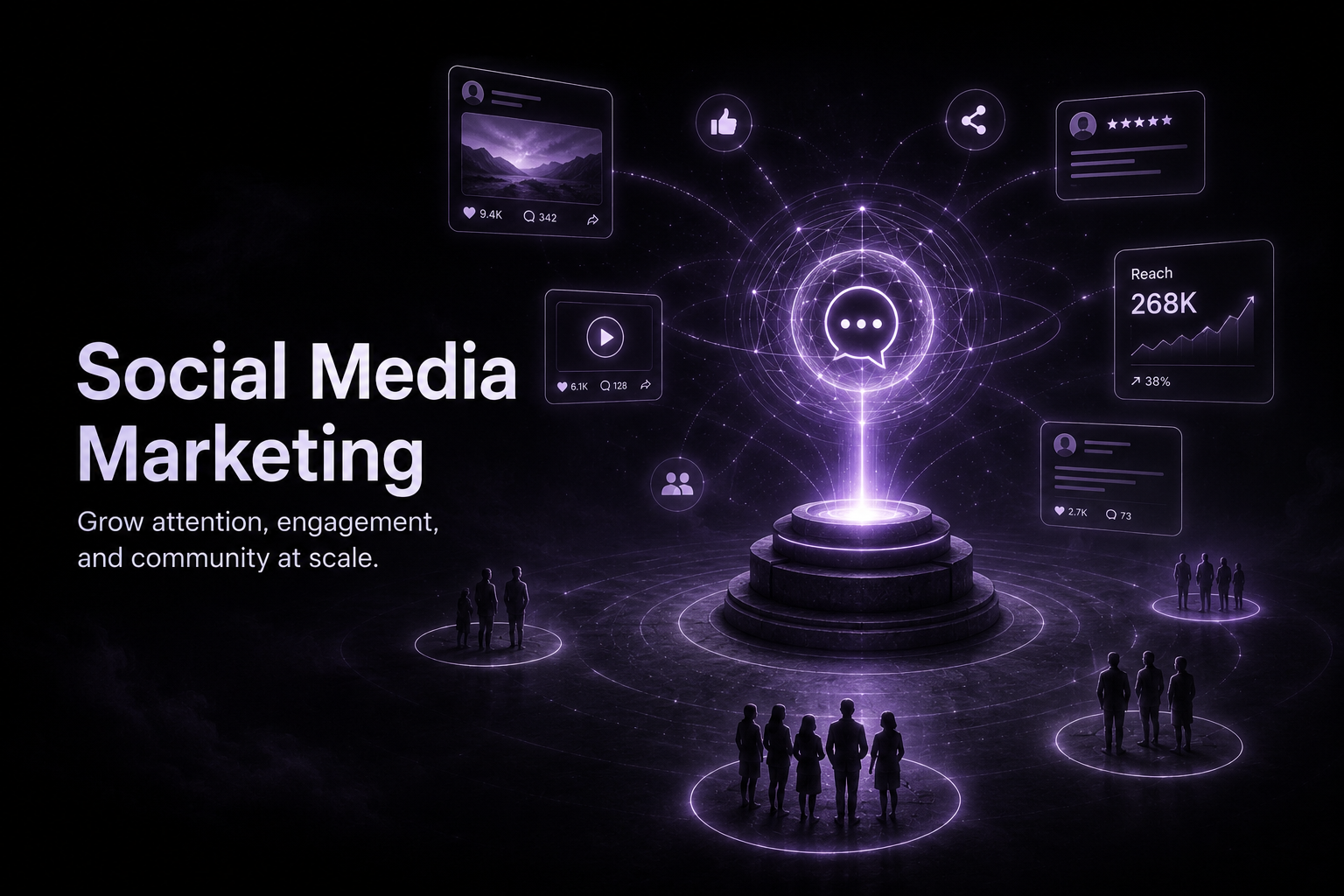
Social media marketing brings together paid campaigns, audience targeting, and platform-specific creative on Instagram, Facebook, LinkedIn, and TikTok to build reach and get people engaging with your brand.
Getting seen on social is the easy part - plenty of agencies stop at placing ads and calling it done. What actually moves the needle is what happens after someone stops scrolling: do they comment, click through, or just keep moving.
A landing page converting at 2% means 98 out of every 100 visitors left without taking action. That gap between "reached" and "engaged" is where most social budgets quietly get wasted, and it's the gap we focus on closing.
At Pixelique, campaigns are built to earn a response, not just an impression. That means creative worth stopping for, paired with targeting tight enough that the right people actually see it. Vanity metrics don't get reported as wins here.
Strategic Advantages of Social Media Marketing
Strategy comes before creative in our process - we decide who we're talking to and what we want them to do before a single post gets designed.
Instagram, Facebook, LinkedIn, and TikTok each reward different content formats, so what runs on one rarely gets copy-pasted onto another - every post is built for the platform it's on.
Design and performance tracking run in parallel, not in sequence, so creative decisions are informed by what the data is already showing.
- Strategic Audience Targeting
- Enhanced Brand Awareness & Trust
- Optimized Ad Performance
- Consistent Brand Identity Across Platforms
- Data-Driven Insights & Reporting

Our Approach to Social Media Marketing
Three stages, repeated every cycle: understand the audience and goal, build and run the content and ad strategy across the right platforms, then monitor and adjust based on what's actually performing.
step 01
Discovery & Strategy
We open with a conversation about your brand, who you're trying to reach, and what success looks like.
From there we look at what competitors are doing and build a framework that fits your specific goals.
step 02
Content Creation & Implementation
Visuals and copy get produced to match your brand's voice, not a generic template.
Campaigns go live, comments and messages get handled, and the posting schedule stays consistent across every platform.
step 03
Optimization & Reporting
Performance data gets reviewed continuously, not just at the end of the month.
Strategy and ad spend get adjusted based on what's working, and reports break down progress against ROI in plain terms.
Not sure why your social accounts aren't converting? Get a free audit and we'll walk through what's holding engagement back.
Get My Free AuditFAQs about Social Media Marketing
It's the practice of using platforms like Facebook, Instagram, LinkedIn, and TikTok to build your brand, reach new customers, and send qualified traffic to your website, through a mix of organic content and paid campaigns.
In practice that spans posting content, running ads, replying to comments and messages, occasional contests or giveaways, influencer partnerships, and tracking the numbers to see what's landing. The end goal is always the same: turn attention on social platforms into brand awareness, loyal followers, and eventually paying customers.
In short, it's the full package of work needed to run social media well, rather than just posting occasionally. What's included depends on the client, but usually covers:
- Strategy: A plan built around your specific audience, industry, and business goals.
- Content: Posts, images, video, and stories built to each platform's format and audience expectations.
- Community management: Replying to comments, messages, and reviews so the account feels responsive, not abandoned.
- Paid campaigns: Targeted ads aimed at specific segments to grow visibility and drive traffic or sales.
- Influencer collaborations: Working with relevant creators to extend reach into their existing audience.
- Reporting: Regular check-ins on reach, engagement, clicks, and conversions, with clear takeaways.
- Profile optimization: Keeping bios, links, and profile setup current and working in your favor.
Put together, these services turn social media from a side task into a channel that actually contributes to growth.
It works as a loop rather than a one-off project: plan, publish, listen, adjust, repeat. Broken down into steps, that looks like:
- Defining goals: Deciding what success actually means before content goes out.
- Knowing the audience: Understanding who they are, what they care about, and how they behave online.
- Picking platforms: Focusing effort where your audience already spends time, not everywhere at once.
- Producing content: Posts, images, video, and graphics built for how each platform's algorithm actually favors content.
- Scheduling consistently: A content calendar keeps posting steady instead of sporadic.
- Engaging directly: Responding to comments and messages rather than posting and disappearing.
- Reviewing results: Reach, engagement, and conversions get checked regularly and feed back into the plan.
Done consistently, that loop is what turns a social account from background noise into a growth channel.
A few signals suggest it's worth prioritizing:
- Awareness is the bottleneck: If not enough people know your brand exists, social reach can fix that faster than most channels.
- You want two-way conversation: Social is one of the few channels where customers talk back, and that feedback is useful.
- You already have content: Blog posts, product updates, or video sitting unused can get a second life distributed on social.
- Website traffic needs a boost: Social can feed qualified visitors into pages designed to convert them.
- Leads or sales are the goal: Paid social targeting reaches specific segments who are more likely to convert.
- Customers already expect it: Many people default to DMs for support - being present there matters.
- Competitors are already active: Absence on social can quietly cost credibility in some industries.
It works for most business types, but the mix of platforms and tactics should match your specific audience rather than following a one-size-fits-all playbook.