
 United Arab Emirates
 Paid Advertising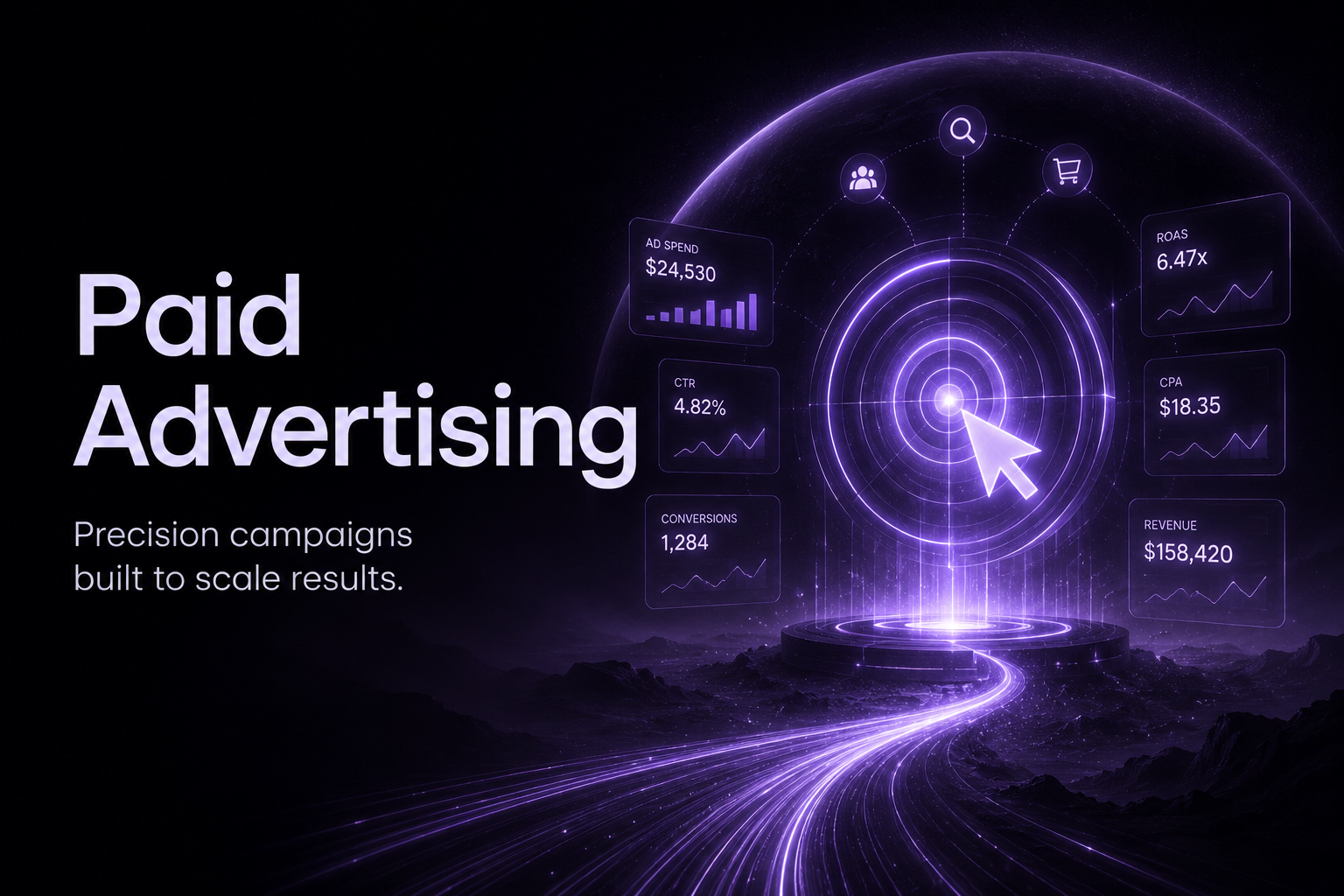
Paid advertising means running and managing pay-per-click campaigns on platforms such as Google Ads and Meta, covering everything from account setup and audience targeting to the daily bid and budget adjustments that keep costs under control.
Ad spend on its own doesn't guarantee results - it's the targeting logic, creative, and ongoing adjustments behind it that decide whether a campaign works. Our Pixelique team builds that logic around your specific goals and revisits it constantly rather than setting a campaign once and letting it run.
Every campaign is built to put your offer in front of people who are actually likely to act on it, not just people who fit a broad demographic. Across Google Ads, Meta (Facebook and Instagram), LinkedIn, and TikTok, we handle creative, targeting, and bid management as one connected process rather than separate tasks.
Creative that stops the scroll only pays off when it's paired with disciplined tracking - we treat the two as inseparable parts of the same campaign.
In the UAE specifically, that means running bids across a market where Google, Meta, and TikTok all compete for the same bilingual Arabic/English audience, mapping budget peaks to Ramadan, UAE National Day, and the Dubai Shopping Festival ahead of time, and always showing AED pricing with the 5% VAT included so there's no surprise at checkout.
Strategic Advantages of Paid Advertising
Rather than chase impressions, our targeting is built to find the smallest audience that's most likely to convert, then expand from there once the data confirms it's working.
Regular data reviews surface where budget is being wasted and where it should be reallocated, so spend keeps moving toward the segments actually producing results.
- Data-Driven Ad Targeting
- Optimized Cost Efficiency
- Comprehensive Conversion Tracking
- Cross-Platform Strategy
- Continuous Testing & Optimization
Our Approach to Paid Advertising
Every campaign moves through the same three stages, from initial research to ongoing optimization, so nothing launches without a clear rationale behind it.
step 01
Discovery & Strategy
We look at your business goals, who you're trying to reach, and what competitors in your space are already doing before drafting a media plan.
Out of that comes the campaign goals, audience targeting, and the KPIs we'll be measured against.
step 02
Campaign Setup & Launch
Creative, copy, and audience parameters get built out and reviewed internally before anything goes live.
Tracking is verified first, then campaigns go live across the chosen platforms so every click is attributable from day one.
step 03
Optimization & Reporting
Performance gets tracked against conversion data on an ongoing basis, not just at month-end.
A/B tests, bid changes, and creative swaps happen continuously so budget shifts toward whatever is working best.
You get a report that explains what happened and what we're doing about it, not just a dashboard export.
Curious what your current campaigns are missing? Request a free audit and we'll flag where budget is leaking and where the quickest wins are.
Get My Free AuditFAQs about Paid Advertising
It's advertising where you pay for placement rather than earn it organically - your product, service, or message appears in front of a specific audience via platforms like Google Ads, Meta Ads (Facebook & Instagram), LinkedIn Ads, TikTok Ads, and YouTube Ads. Each platform lets you narrow who sees your ads by demographic, interest, past behavior, or search intent.
The main difference from organic marketing is speed: paid campaigns show results within days rather than months. Depending on the goal, you can pay per click (PPC), per thousand impressions (CPM), or per acquisition (CPA) - the model shapes how tightly you control cost.
Ultimately it's a tool for putting your offer in front of people close to a decision - whoever is most likely to buy, sign up, or reach out - rather than waiting for them to find you.
SEO and content compound slowly over months; paid campaigns give you a lever you can pull today. That combination of speed and control is why most growth-stage brands run both in parallel rather than picking one.
- Speed: Clicks and conversions start arriving within days of launch, not after months of ranking work.
- Granular targeting: Narrow an audience down by age, location, interests, job title, or even recent search intent.
- Spend control: Daily and monthly caps can be adjusted the moment performance changes.
- Full measurability: Every click and conversion is logged, so ROI isn't a guess.
- Consistent visibility: Ads keep your brand present in search results and feeds even between organic ranking gains.
Put simply, paid media buys you the speed that organic channels can't offer on their own.
ROI isn't something we promise upfront and hope for - it's something we build toward through a repeatable process of testing, tracking, and adjusting.
- Grounded setup: Audience research, competitor analysis, and agreed KPIs come before any ad goes live.
- Split testing: Multiple creative and copy variants run head-to-head so we know what's actually resonating.
- Live adjustments: Bids, audiences, and placements shift in response to real performance, not on a fixed schedule.
- Full-funnel tracking: GA4, Meta Pixel, and server-side conversion APIs give us visibility into the entire customer path.
- Honest reporting: Dashboards show CTR, CPA, and ROAS as they are, including the campaigns that underperform.
It's this loop of testing and adjusting, repeated week after week, that keeps ad spend working harder over time rather than plateauing.
Which platforms we use comes down to where your audience actually spends time, not a fixed package of channels applied to every client.
- Google Ads: Search, Display, Shopping, and YouTube placements built for both lead capture and top-of-funnel reach.
- Meta Ads (Facebook & Instagram): Strong for retargeting warm audiences and driving direct sales through feed and story placements.
- LinkedIn Ads: The go-to for B2B targeting by job title, industry, or company size.
- TikTok Ads: Short-form video that reaches younger, highly engaged audiences through native-feeling creative.
- YouTube Ads: Longer-form video for building brand trust and educating prospects before they convert.
Platform mix gets revisited as your goals and audience behavior shift, not locked in at the start and left untouched.