

 United Arab Emirates

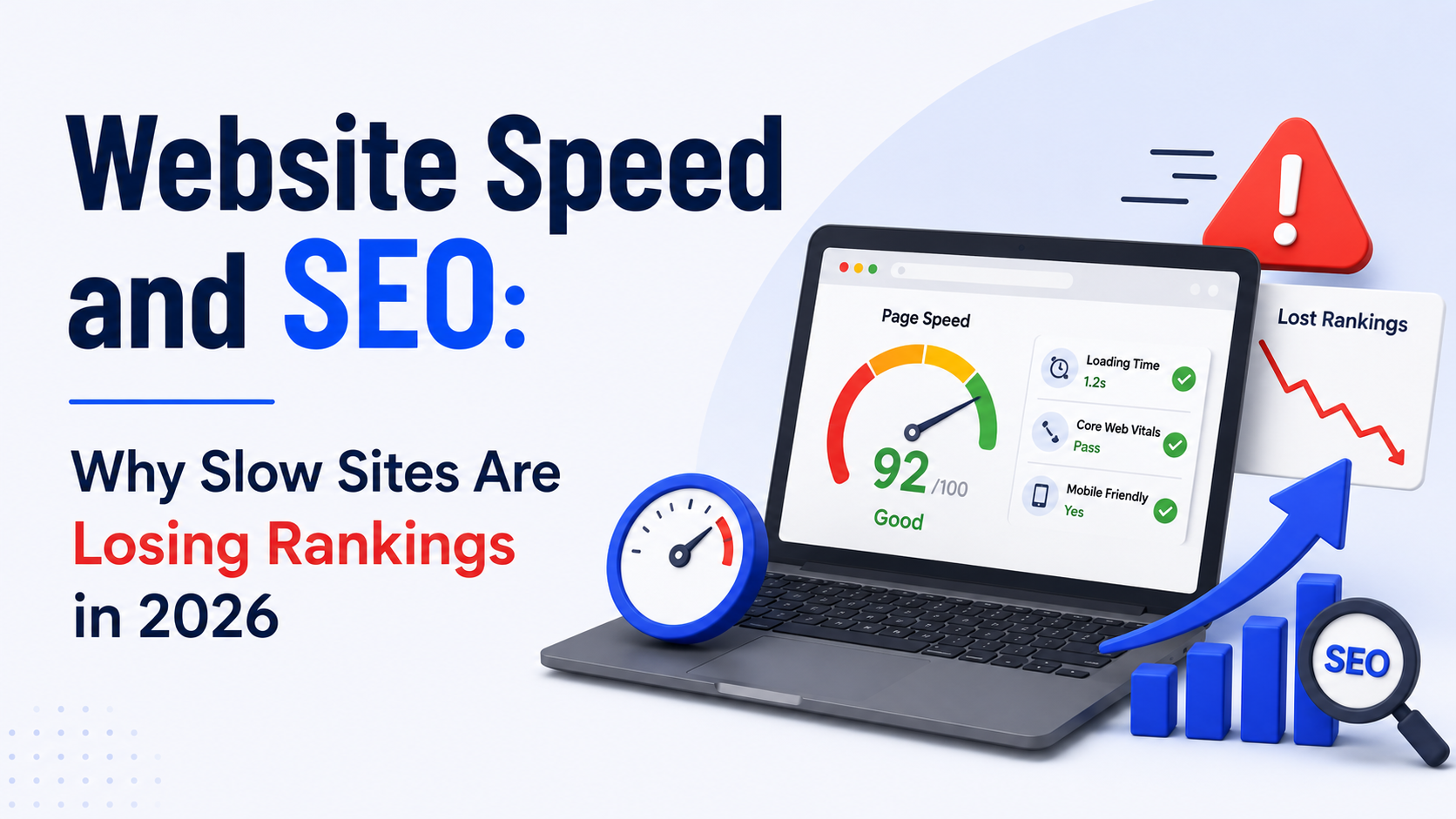
Website speed has been a Google ranking factor since 2010 for desktop and 2018 for mobile. In 2026, with Core Web Vitals embedded in Google's ranking system and user tolerance for slow websites at an all-time low, it is no longer a technical nicety - it is a competitive necessity. Slow sites lose rankings, lose traffic, and lose conversions simultaneously.
The relationship between speed and business outcome is direct and well-documented. Amazon's research showed that every 100 milliseconds of additional load time cost them one percent of revenue. Google's data shows that 53% of mobile users abandon a page that takes longer than three seconds to load. For most websites, improving page speed from four seconds to two seconds delivers measurable gains in both organic ranking and conversion rate.
Understanding Core Web Vitals
Google's Core Web Vitals are the three specific metrics used to assess page experience: Largest Contentful Paint (LCP), Interaction to Next Paint (INP), and Cumulative Layout Shift (CLS). These are field metrics - measured from real users visiting your pages - which means they reflect the actual experience visitors have, not lab measurements taken under ideal conditions.
Largest Contentful Paint (LCP)
LCP measures how long it takes for the largest visible content element - usually the hero image or main heading - to appear on screen. Google's threshold for a "good" LCP is under 2.5 seconds. Most of the websites we audit fall between 3 and 6 seconds, primarily due to unoptimised hero images, render-blocking resources, or slow server response times. This is the metric with the highest impact on perceived load speed and the one most users consciously notice.
Interaction to Next Paint (INP)
INP replaced First Input Delay in 2024. It measures the responsiveness of a page to user interactions - how quickly the page responds after a click, tap, or keyboard input. A page that appears visually loaded but doesn't respond to clicks for two seconds feels broken. INP under 200 milliseconds is the "good" threshold. Common causes of poor INP are heavy JavaScript execution, inefficient event handlers, and long tasks blocking the main thread.
Cumulative Layout Shift (CLS)
CLS measures visual stability - how much the page layout shifts unexpectedly while loading. A layout shift score below 0.1 is considered good. The most common cause of high CLS is images without defined dimensions (causing content to jump when the image loads), late-loading ads or embeds, and fonts that cause reflow when they swap. CLS is directly user-hostile: clicking what appears to be a button only to have the page shift and click something else is a frustrating and common experience on poorly optimised sites.
Diagnosing Your Speed Problems
Tools for Diagnosing Website Speed
Google PageSpeed Insights gives you field data from the Chrome User Experience Report alongside lab data - use both. Google Search Console's Core Web Vitals report shows which URLs on your site are failing and by how much. WebPageTest.org provides detailed waterfall analysis for identifying exactly which resources are causing delays.
The Most Common Speed Killers
Across hundreds of site audits, the same causes of poor speed appear repeatedly. Unoptimised images are the most frequent culprit - large, uncompressed images in PNG or JPEG format where WebP or AVIF would reduce file size by 30 to 70 percent. Render-blocking JavaScript and CSS that delays the browser from displaying content. Poor server response times (TTFB above 600ms) from cheap shared hosting or unoptimised server configuration. Excessive third-party scripts - analytics, chat widgets, retargeting pixels, and social embeds - that add significant load time without proportionate value.
The Highest-Impact Speed Fixes
Not all speed improvements are equal. These are the fixes with the highest impact on Core Web Vitals scores:
- Convert images to WebP or AVIF. This single change typically reduces image payload by 40 to 60 percent with no visible quality loss. Serve appropriately sized images using `srcset` - there is no reason to load a 2000px-wide image on a 375px-wide mobile screen.
- Implement lazy loading for below-fold images. Add `loading="lazy"` to any image that isn't visible in the initial viewport. This defers loading until the user scrolls toward the image, significantly reducing initial page weight.
- Preload your LCP element. Adding a preload hint for the hero image tells the browser to fetch it as a high priority before it discovers the image in the HTML. This is one of the most effective LCP improvements available.
- Defer non-critical JavaScript. Any JavaScript that isn't needed to render the above-fold content should be deferred or loaded asynchronously. This reduces the time-to-interactive and improves both LCP and INP.
- Enable browser caching and compression. GZIP or Brotli compression reduces text file sizes by 70 to 90 percent. Appropriate cache headers mean returning visitors load pages from cache rather than fetching everything again.
- Upgrade your hosting or switch to a CDN. TTFB problems almost always require infrastructure solutions. A CDN serves static assets from servers geographically close to the user, dramatically reducing latency.
"Most businesses see speed as a technical issue and delegate it permanently to their developers. The ones growing fastest treat it as a marketing issue - because that's exactly what it is when it affects your rankings and conversion rate."
- Roksana Miszczak, Digital Marketing Strategist at Pixelique Digital
Website speed improvements compound with your other SEO and CRO efforts - a faster site ranks better, converts better, and reduces bounce rate, which further signals quality to Google. If you want to know where your site stands and what the highest-impact fixes are for your specific situation, request a free technical audit from our team.