
 United Arab Emirates

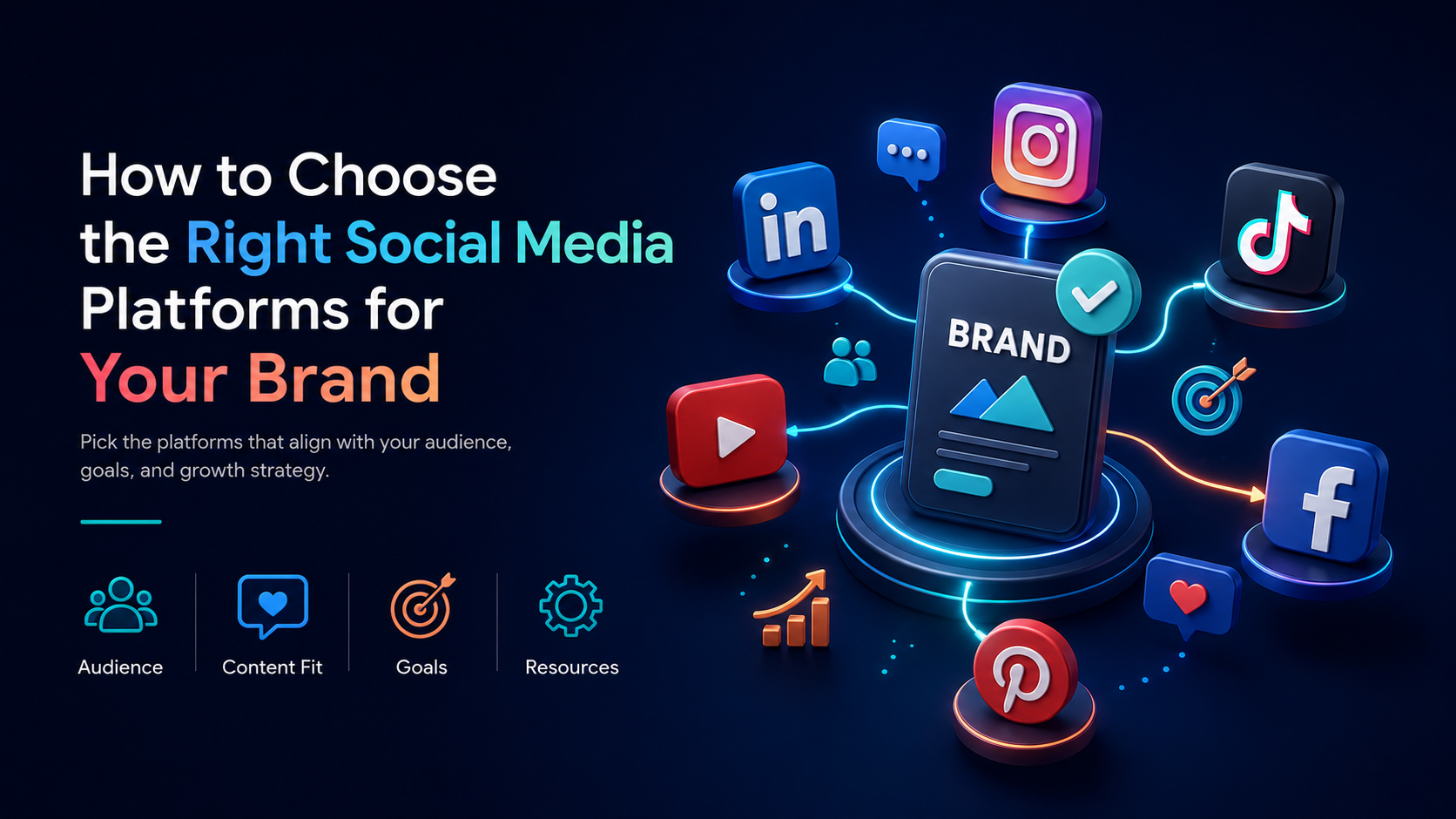
One of the most common mistakes brands make with social media is trying to maintain an active presence on every platform simultaneously. The logic seems sound, more platforms means more visibility. In practice, it means thinner content, inconsistent posting, and a team stretched to breaking point. The brands that win on social are almost always those that dominate two or three platforms rather than mediocrely covering eight.
In 2025, the platform landscape is more fragmented than ever, but the framework for choosing where to invest hasn't changed as dramatically as people think. It still comes down to three core questions: where is your audience, what content format suits your brand, and where can you realistically sustain quality output? Here's how to answer all three with data behind you.
Why Being Everywhere Is a Losing Strategy
Social media algorithms in 2025 reward consistency and engagement rate over raw follower count. A brand that posts three times per week on two platforms, and earns genuine interaction each time, will outperform a brand that posts daily across six platforms and gets nothing. The algorithm reads low engagement as a signal to suppress your content further, which creates a self-reinforcing downward spiral.
There is also the question of creative quality. Short-form video, carousel posts, long-form thought leadership, community engagement, each of these requires real time and skill to execute well. When your team is stretched across six channels, the quality of all of them suffers. Brands that focus build recognisable, consistent content identities. Brands that spread thin become forgettable.
The data backs this up: in our work with clients across Europe and the Gulf, the brands that pulled back to two or three focused platforms consistently saw engagement rates climb within 60 days of making that shift. Less truly is more on social.
Understanding Your Audience: Where Are They Actually Spending Time?
Before you make any platform decision, you need to answer one question with evidence rather than assumption: where does your specific target audience actually spend time? Not where you think they should be, and not where everyone else in your industry seems to be. Where are they?
Start with your own analytics. If you already have any social presence, platform analytics will show you where your current audience is most engaged. Next, use audience research tools, Meta Audience Insights, LinkedIn's audience data, and Google Trends can all confirm or challenge your assumptions.
Beyond that, look at your competitors. Not to copy them, but to understand where the category conversation is happening. If your three main competitors are all running active LinkedIn communities and barely posting on TikTok, that tells you something about where your shared audience is. And talk to your existing customers directly, ask them which platforms they use professionally and personally. The answers often surprise people.
"The best social strategy isn't where you want to be. It's where your audience already is, and where you can sustain quality output long enough to matter."
- Roksana Miszczak, Digital Marketing Strategist at Pixelique Digital
Platform-by-Platform Breakdown for 2025
Each major platform has a distinct audience profile and content culture. Understanding where each excels helps you match platform to purpose rather than choosing based on personal preference.
The dominant platform for B2B marketing, professional services, and thought leadership. If your buyers are decision-makers, C-suite, directors, managers in mid-to-large companies, LinkedIn is non-negotiable. Long-form posts, company updates, and founder-led content all perform well. The algorithm currently favours personal profiles over company pages, so get your leadership team active alongside the brand account.
Still the strongest platform for B2C lifestyle, fashion, food, hospitality, beauty, and retail. Instagram rewards visual quality and consistency above all else. Reels dominate reach; Stories drive direct engagement. If your brand has a strong visual identity and a product or service that photographs or films well, Instagram should be a priority. It also works well for eCommerce brands running product-focused content.
TikTok
The highest organic reach potential of any platform in 2025, but it demands a specific content style, authentic, fast-paced, and entertainment-first. TikTok works for brands willing to lean into native content formats rather than repurposing polished marketing videos. It is no longer just for Gen Z: 35–44 year-olds are now one of the fastest-growing demographics on the platform. Strong for DTC brands, service businesses with educational angles, and any brand that can find an entertaining or informative niche.
Organic reach for brand pages has been declining for years, but Facebook remains valuable for local businesses, community building via Groups, and paid advertising. Its demographic skews older (30+), making it effective for local services, home improvement, financial services, and anything targeting parents or homeowners. Facebook Groups are an underused channel for building owned communities around shared interests.
X (Twitter)
Best suited for brands in tech, finance, media, politics, or any sector where real-time commentary and industry conversation is part of the value proposition. Organic reach has become more unpredictable since ownership changes, but for B2B brands with strong opinions and a willingness to engage publicly, X can still build significant credibility and inbound interest.
Pro Tip
Choose platforms based on where your audience is, not where you're most comfortable. If your ideal client is a procurement manager at a manufacturing firm, they are almost certainly on LinkedIn, not TikTok. Let the data lead.
How to Match Platform to Your Business Type
Beyond the individual platform profiles, there are reliable patterns for business type and platform fit. These aren't absolute rules, exceptions exist in every category, but they're a useful starting framework when you're building your social strategy from scratch.
B2B businesses with long sales cycles should prioritise LinkedIn for relationship-building and thought leadership, and consider YouTube for longer educational content. They should be cautious about heavy investment in Instagram or TikTok unless there's a genuine creative angle that connects to their audience's professional pain points.
eCommerce and product-led B2C brands typically see the best returns from Instagram and TikTok, with Pinterest worth considering for home, fashion, and food categories. Facebook remains valuable for retargeting and paid campaigns even if organic brand content has diminishing returns.
Local service businesses, trades, restaurants, clinics, salons, should focus on Google Business Profile first (which functions like a social platform in its own right), then Facebook for community engagement, and Instagram if the service has a strong visual dimension. For these businesses, consistent social media management matters more than platform breadth.
Professional services firms, consultancies, agencies, legal, financial, belong on LinkedIn. A strong, active LinkedIn presence with regular thought leadership content will outperform a scattergun approach across multiple platforms every time. Complement this with an integrated social media marketing strategy to amplify reach beyond organic alone.
How to Audit and Sharpen Your Social Presence
If you already have an established social presence, the question isn't just where to start, it's how to rationalise what you have. A social media audit is the right first step. Pull performance data from every platform for the past 90 days: follower growth rate, average engagement rate, reach, and any direct conversions or website traffic attributable to each channel.
Then apply a simple scoring framework:
- Engagement rate above platform average? Score it high.
- Driving measurable traffic or leads? Score it high.
- Flat growth and minimal engagement despite consistent posting? This platform may not be right for your brand right now.
- Channel where you post irregularly because the team has no bandwidth? Cut it or put it on pause, ghost accounts damage brand perception.
The goal of the audit is to identify your one or two highest-return platforms, double down on those, and either pause or deprioritise the rest. This feels uncomfortable for many brands, there's a fear of missing out. But a stronger presence in fewer places is almost always the right call, and the engagement metrics will confirm it within 60 to 90 days.
If you'd like a fresh set of eyes on your current social media footprint, get in touch with our team, we offer a no-obligation social audit to help you identify where to focus and where to cut.